T.A.R.G.E.T. is a pre-qualification system for Indian real-estate Meta campaigns.
It moves qualification out of your calling team and into your targeting, your creative and your form — so the wrong buyer removes himself before you ever pay for the click.
One-time payment · emailed within 2 minutes · yours permanently


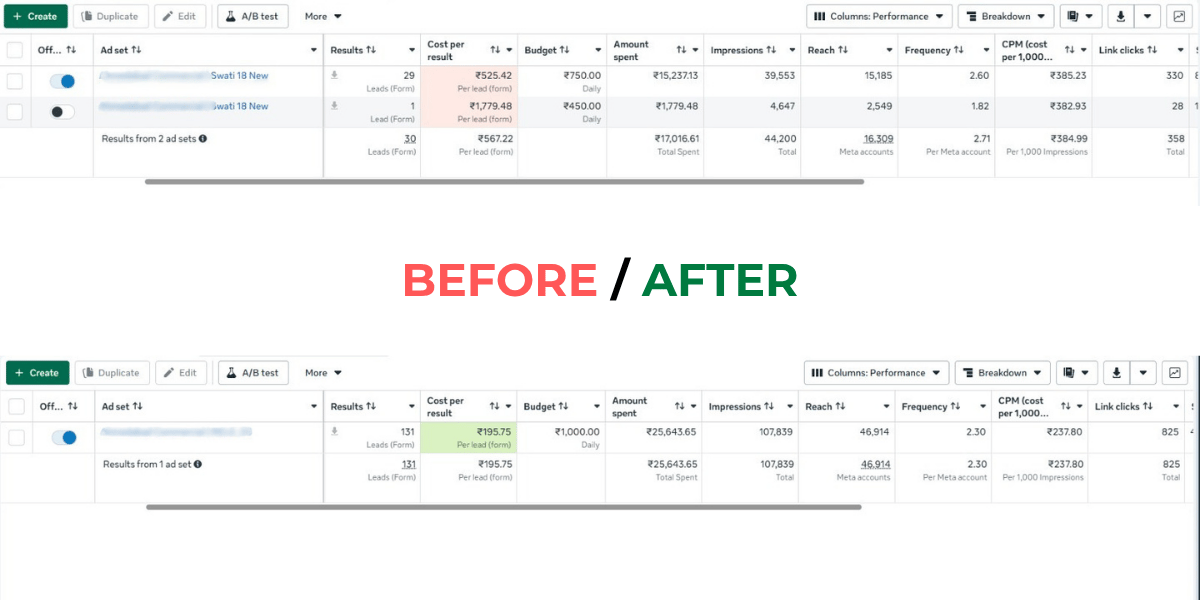
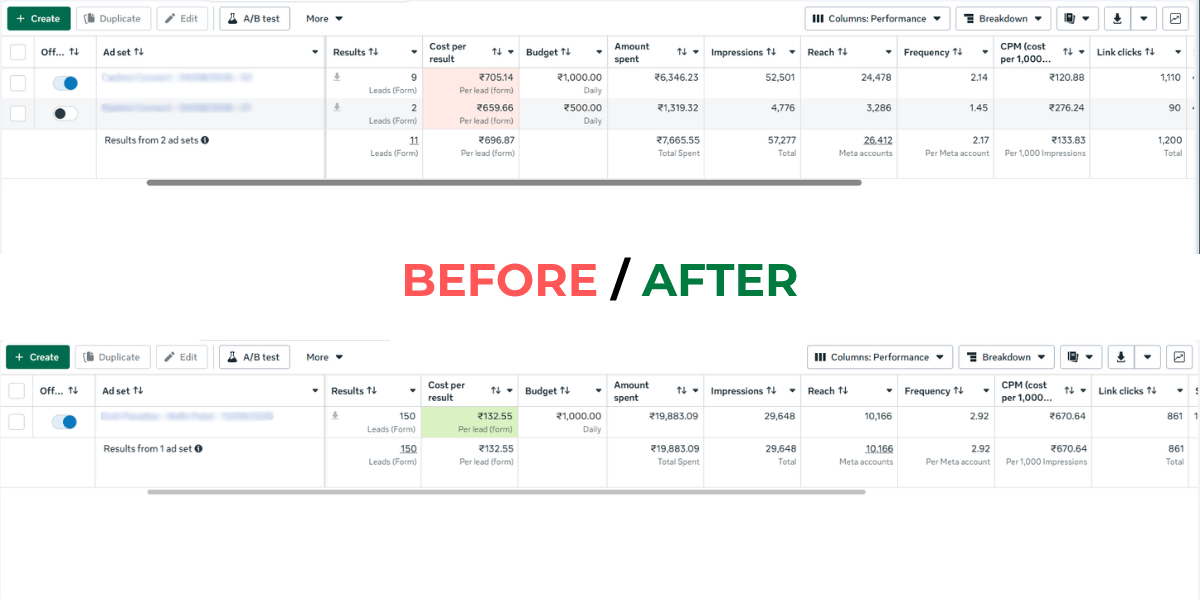
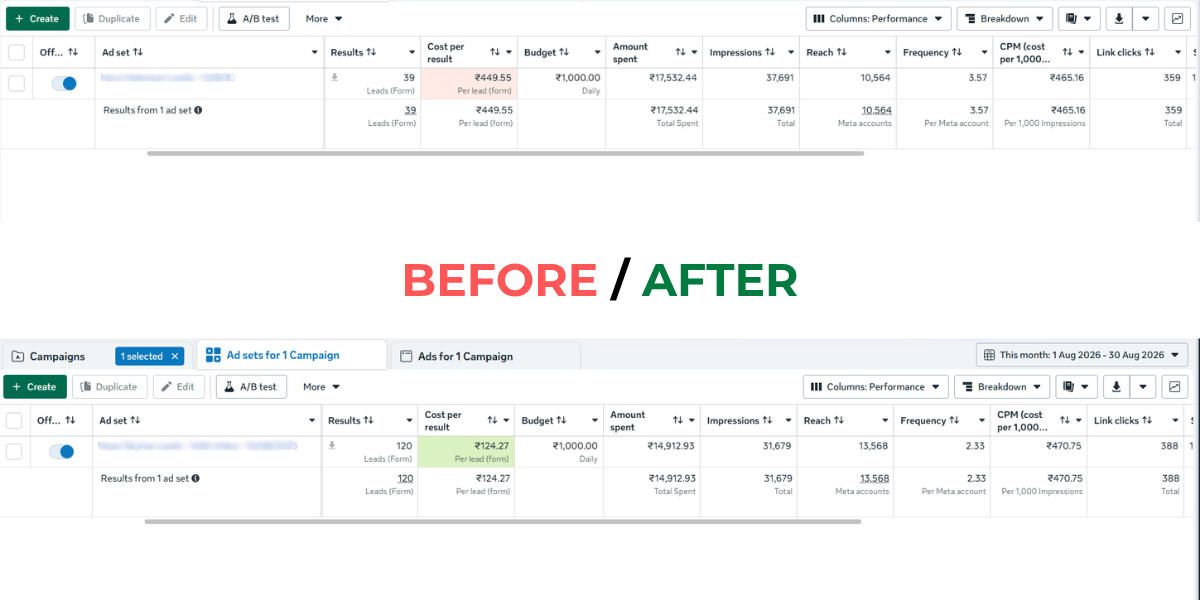
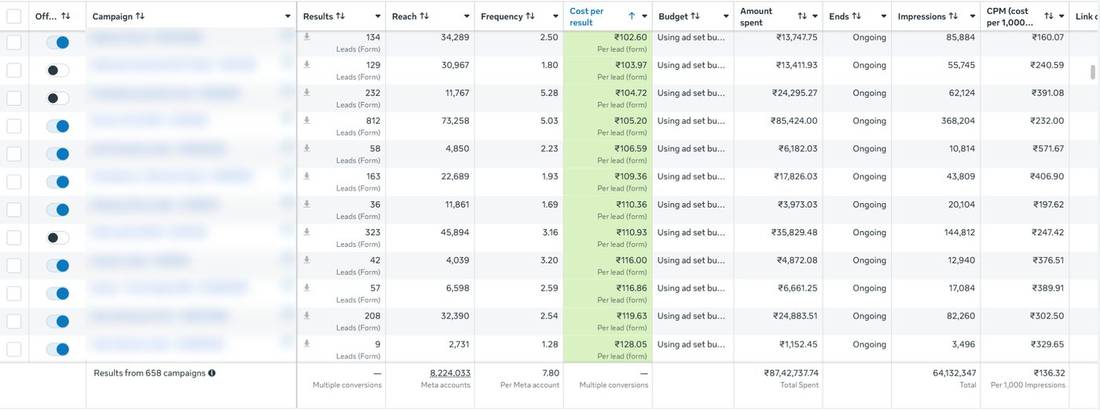
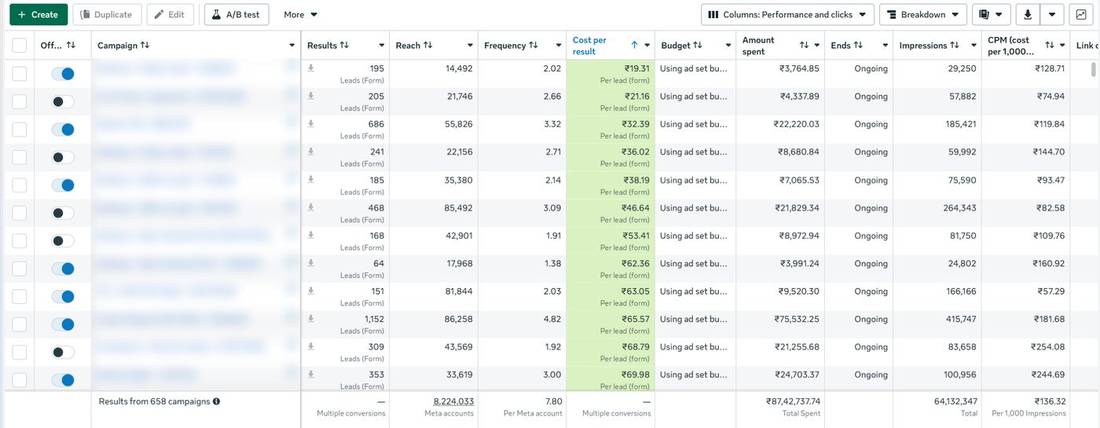
Cost-per-lead figures are from live Ads Manager accounts (shown above). Site-visit ratios are indicative, from the developers’ own tracking.
How much of this is your month? Tick whatever is true right now.
Tick the ones that apply — the page reacts.
₹40,000 spent. Three site visits. Zero bookings.
That is the number your CPL report never shows you. It went to finding out 99 of them were never buyers.
A worked example at round numbers, not a claim about your account. Run your own last month through the same five rows — the shape rarely comes out different.
Three things happen, in this order, every single month.
Instant Forms fill the name and number in a single tap. You're paying for a reflex, not a decision.
After two weeks of dead calls, callers start skipping numbers. The genuine buyers die inside your own CRM.
Optimising for a lower CPL tells Meta to find easier clickers. Cheaper leads, weaker buyers, same spend.
Stop qualifying leads after they enter your CRM.
Start qualifying them before they become leads.
This is the whole idea, and it is the only thing you really need to take from this page. Every rupee of filtering should happen on Meta's side of the transaction — in the targeting, in the creative, in the form — not on yours.
You pay for the wrong buyer, then pay again to discover he was wrong.
The wrong buyer removes himself before you ever pay for him.
That is the mechanism. Everything inside the system — the targeting stack, the creative structures, the form blueprint — exists to move qualification from step three to step one.
T.A.R.G.E.T. — six chapters, six places qualification can happen
Meta already gives you every one of these settings. What it does not give you is an order to use them in, or a rule for what belongs where. The framework is six chapters, each one a decision point that removes a category of wrong buyer before the next stage begins.
The first two chapters are open below. The rest stay under wraps until you're in.
Working backwards from the project — price, location, realistic affordability — to the interest, behaviour and income layers that reach people who can actually buy.
Building the angle so the ad does the first round of qualifying — where price sits, what the creative admits upfront, why the right buyer leans in and the wrong one scrolls past.
The reach-vs-spend knobs to turn once qualification works — so Meta stops chasing the cheapest clicker and protects lead quality instead.
The form structure that removes the wrong buyer mid-submit — question order, wording, and the budget question that does most of the filtering.
The first four-minute follow-up window, the seven-message ladder, and booking a site visit as a choice between two slots.
Cost per qualified lead and per site visit, and how to feed it back so Meta hunts buyers, not clickers.
The framework, the worked example, and the nine files that implement it
Nine working files that put the framework on your next campaign
Interest, behaviour and demographic combinations organised by ticket size and city tier — copy-paste ready.
Static, carousel and video structures that have run live for developers, with the hook placement that holds attention.
Fill-in-the-blank copy in English and Hinglish, written for an Indian feed, not translated from American copy.
Exact question order, wording and answer options, including the budget question that removes most junk on its own.
The first-ninety-seconds opener, the seven-message ladder, and the revival sequence for leads that went quiet.
What to check each morning, which numbers matter, and when to pause, scale or leave the campaign alone.
Tested prompts for ad copy, angle generation and objection handling, pre-loaded with property context.
One real project taken from brief to live campaign — every decision explained as it was made.
Location layering for projects where the address sells, plus the radius mistake that ruins most targeting.
Emailed within two minutes · yours permanently
Real accounts, including the campaigns that looked excellent in Ads Manager and still had to be rebuilt.
How one project reached a ₹15 cost per lead, why the report looked spectacular, and why the campaign still needed rebuilding. The clearest argument for everything on this page.
Where to place each pre-qualification layer so no single filter carries all the weight — before the form, inside the form, and after it reaches your CRM.
Eleven setup errors that quietly destroy lead quality without ever showing up as a problem in your reporting. Most accounts I audit are making at least four.
Six passes. One afternoon for your first project. Forty minutes after that.
Price, location and realistic affordability decide the audience — not the other way round.
Layer the interest, behaviour and income signals that match the ticket size and city tier.
Price anchor, buyer context and the exclusionary line — biggest volume drop, biggest site-visit lift.
Budget, intent and timeline in a specific order, with answer options that make the wrong person abandon.
First contact inside four minutes, then a structured ladder that asks for the visit as a choice between two slots.
Cost per qualified lead and cost per site visit, fed back to Meta so the algorithm learns to hunt buyers.
Not a course seller. A practitioner who runs Meta campaigns for real-estate developers every day.
This is worth ₹497 to some people, and nothing to others
You're a marketer, so you already discount claims on sales pages. Here are the accounts these numbers come from — campaign names blurred, everything else exactly as it appears in Ads Manager.
One lead's worth. For the whole system.
You are already paying ₹300–800 for single enquiries that may never pick up the phone. ₹497 is roughly one of those — for the whole system, once.
Launch price · rises to ₹997 on 30 September 2026
One time · no subscription · yours permanently
🔒 Secure checkout · download link emailed instantly
Three steps, about two minutes
Standard secure checkout. Under a minute on your phone.
Every file attached, plus a permanent download link. Check promotions if it isn't in the inbox.
No portal, no password, no expiry. Files sit on your phone or laptop and are yours permanently.
The questions people actually ask
Courses teach the platform — which buttons exist. This changes what you say in the ad and ask in the form, where qualification actually happens. A method plus the files that implement it, so you rebuild a campaign in an afternoon.
Written for how property sells across Mumbai, Ahmedabad, Surat, Rajkot, Pune, Hyderabad, Bangalore, Delhi NCR and tier-2 markets. Targeting, creative and form blueprint transfer directly; city details adjust inside the keywords file.
The complete T.A.R.G.E.T. framework (all six chapters, one real project from brief to live campaign), nine working files, and three case breakdowns. Everything is emailed within two minutes of payment — files attached, plus a permanent download link.
No product can guarantee results. It moves qualifying out of your calling team and into targeting, creative and form — where it belongs. Results depend on your market, product and execution.
No — it's the standard you both work to. A good agency implements it faster than you can; a weak one resists it. Either way you get a shared definition of a good campaign, which is usually what's missing.
Lifetime updates. When Meta renames or moves something, the file is updated and re-sent at no extra cost.
The filters need volume to show up — practically ₹15,000/month and above. Below that, form and creative tweaks still help, but targeting gains shrink because Meta lacks signal to optimise.
It was written for in-house marketing at developer offices — most readers run campaigns but don't design them. The keywords file, headline bank and form blueprint mean you edit what's already there instead of writing from scratch.
The only question is what it buys.
Your next campaign is going to spend that money either way. The real decision is whether you keep paying for every enquiry that arrives — or start qualifying before you pay for the lead at all.
Emailed instantly · lifetime updates · yours permanently